Zero-config local agents

The zero-config CLI for running AI coding agents locally.

No YAML required. No setup file required. Just vp run claude in Docker, with reusable skills and a built-in analytics dashboard.

Install VibePod once. Run Claude, Gemini, Codex, Devstral, Copilot, Auggie, OpenCode, or Pi in an isolated container with a single command. Add reusable prompt recipes with vp skills, and add global or project YAML only when you want shared defaults, custom images, env vars, init scripts, or LLM routing.

  • Zero config by default
  • Reusable skills
  • Optional YAML overrides
  • Isolated Docker containers
Screenshot of the VibePod CLI tool interface.
Run preconfigured coding agents locally from one CLI.

Zero config by default

No config required. YAML when you want it.

VibePod ships with major coding agents pre-configured. Start immediately, then add global or project YAML later for overrides your team wants to share.

Manual setup VibePod
Write YAML before first run Skip it; defaults are built in
Choose and configure a model upfront Use agent defaults, or set LLM routing later
Wire up tools and servers Optional env vars, init scripts, and custom images
Share project defaults vp config init
Run your agent vp run claude

Quickstart

Install and run an agent

Install from PyPI, run any supported agent with no project config, then start the dashboard when you want local metrics.

python -m pip install vibepod
vp run claude
vp logs start

Tip: pin versions in automation with python -m pip install vibepod==<version>.

Open PyPI Open Docs Quickstart
$ vp version
VibePod CLI: 0.13.0
Python:      3.12.3
Docker:      28.1.1

$ vp run claude
Starting claude with image vibepod/claude:latest
Live-style local runtime preview.

How it works

Three commands from run to analytics

  1. List available agents

    Run vp list to see which agents are available in your local setup.

    Note: vp list also shows active workspaces.

  2. Run the agent you want

    Start work with vp run claude, then switch agents by rerunning the command with a different name.

    Note: the current folder is used as the active agent workspace.

  3. Open the analytics dashboard

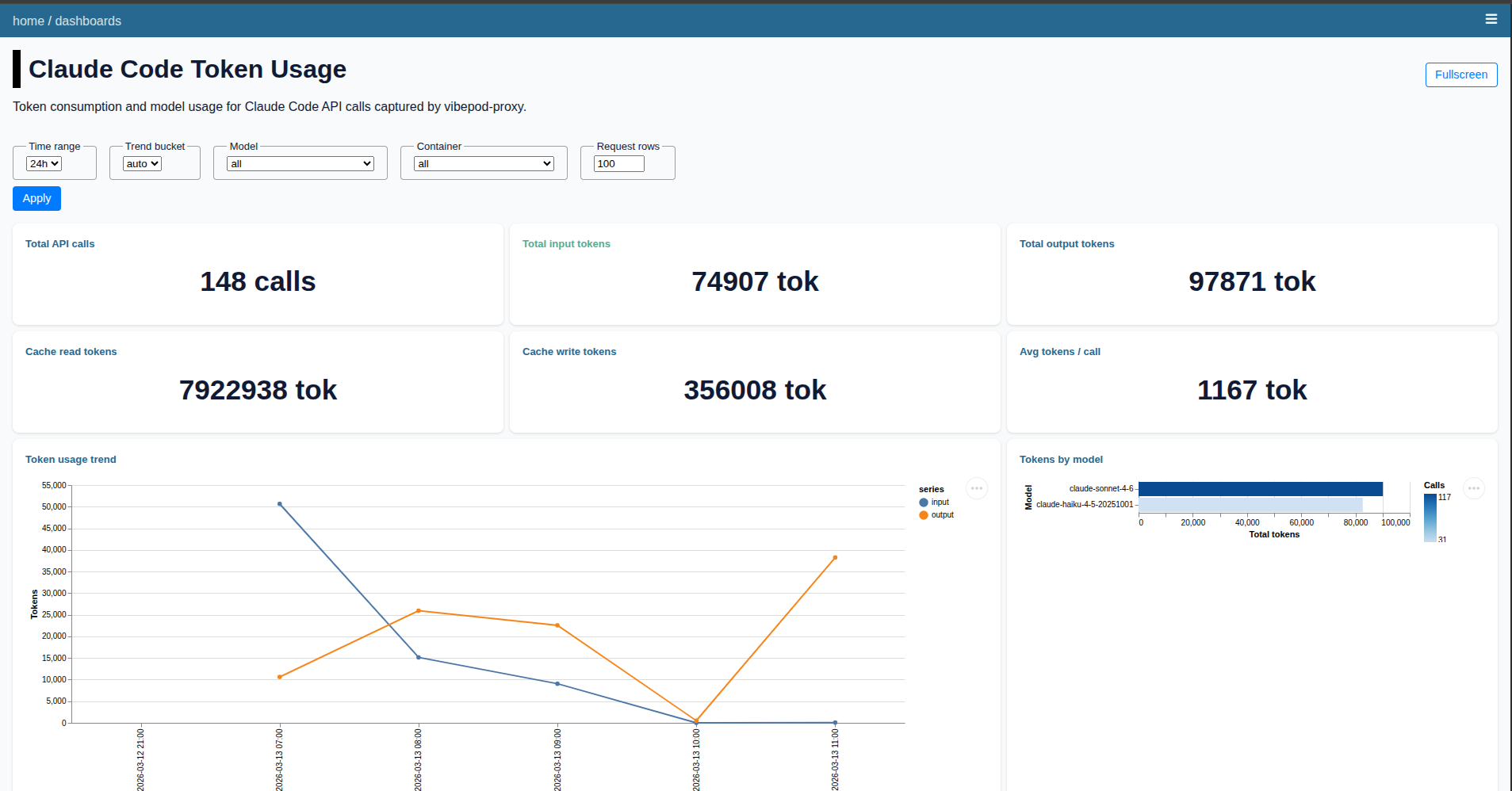
    Run vp logs start to launch the local dashboard. It shows HTTP traffic, usage metrics, and lets you compare agents side by side.

Core features

Zero-config local agent operations

Zero config by default

No project file is needed to start. Claude, Gemini, Codex, Devstral, Copilot, Auggie, OpenCode, and Pi are ready out of the box.

Proof point: run an agent with vp run <agent>.

Optional project config

Add .vibepod/config.yaml only when you want team defaults for images, env vars, init scripts, proxy, logging, or LLM settings.

Proof point: create a starter with vp config init.

Local analytics dashboard

Track HTTP traffic, usage, and activity per agent from a browser-based dashboard.

Proof point: launch it with vp logs start.

Built-in traffic proxy

VibePod can start a local mitmproxy container alongside agents and write captured HTTP(S) traffic to SQLite.

Proof point: disable it with VP_PROXY_ENABLED=false.

Reusable skills

Install prompt recipes per user or per project, then mount them into supported agents automatically.

Proof point: vp skills add github:vibepod/vibepod-skills//skills/researcher.

Detach and reattach

Keep long-running containers alive after a terminal closes, then reconnect to a managed container when needed.

Proof point: vp attach <container>.

Custom images and startup hooks

Override an agent image for a one-off run or persist it in config, and run idempotent shell commands before startup.

Proof point: set VP_IMAGE_CLAUDE=myorg/claude:dev.

OSS and remote LLM routing

Route Claude or Codex to Ollama, vLLM, or another compatible endpoint with config or runtime environment variables.

Proof point: set VP_LLM_ENABLED=true.

Compose-aware workspaces

When a workspace has Compose files, VibePod can connect an agent container to the right Docker network.

Proof point: use vp run claude --network my-net.
Why VibePod?

Less setup, more local visibility

Workflow need Manual setup VibePod
Agent configuration Write YAML before first run Pre-configured; YAML is optional
Switch agents Rewrite config and rerun vp run <agent>
Container isolation Manual Docker setup Built in
Project defaults Hand-maintain setup docs Commit .vibepod/config.yaml
Usage tracking Bring your own tooling Local dashboard
HTTP traffic logging Manual proxy setup Built in
Reusable prompts Copy instructions between tools manually vp skills add
Agent comparison Manual notes Side-by-side dashboard views
Data privacy Depends on vendor and tooling Metrics stored locally

Product screenshots

Dashboard and supported tools

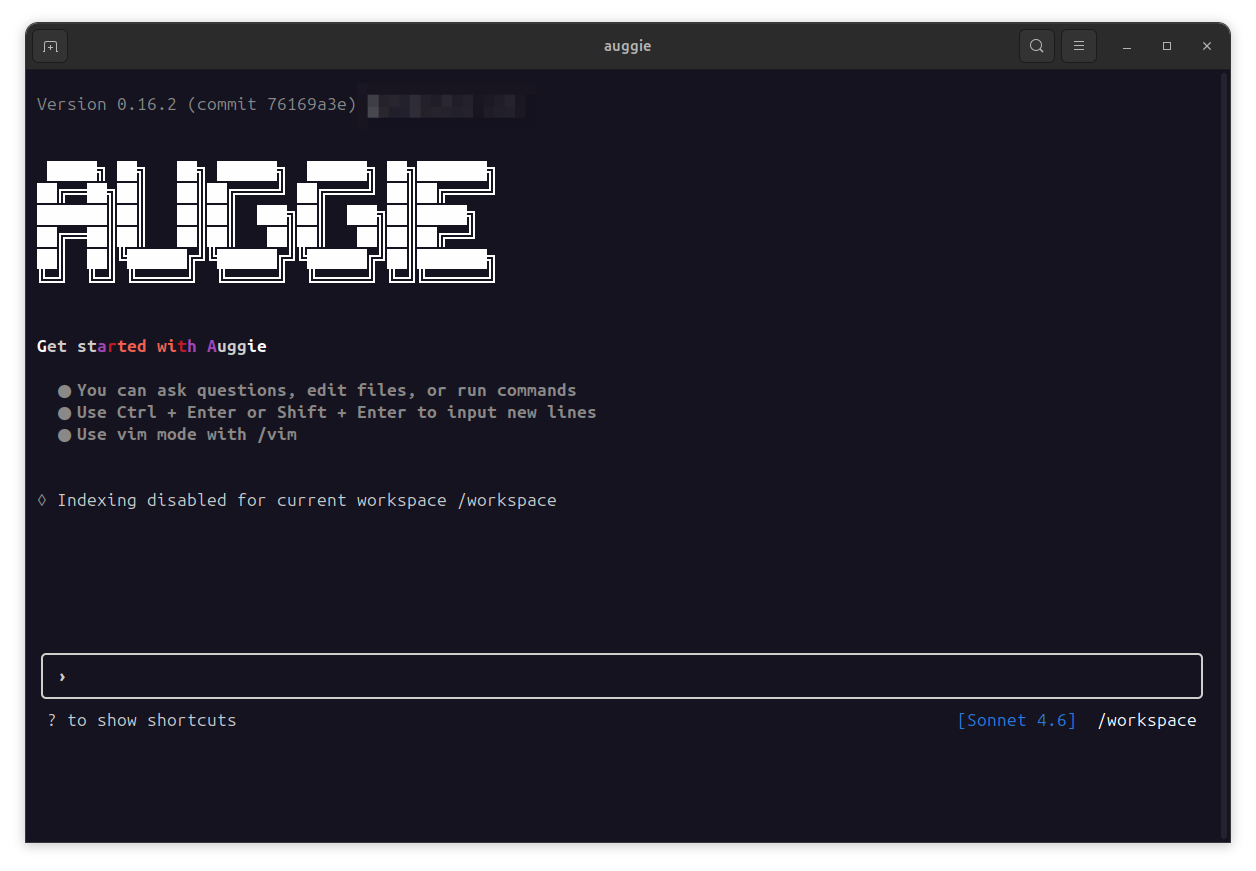
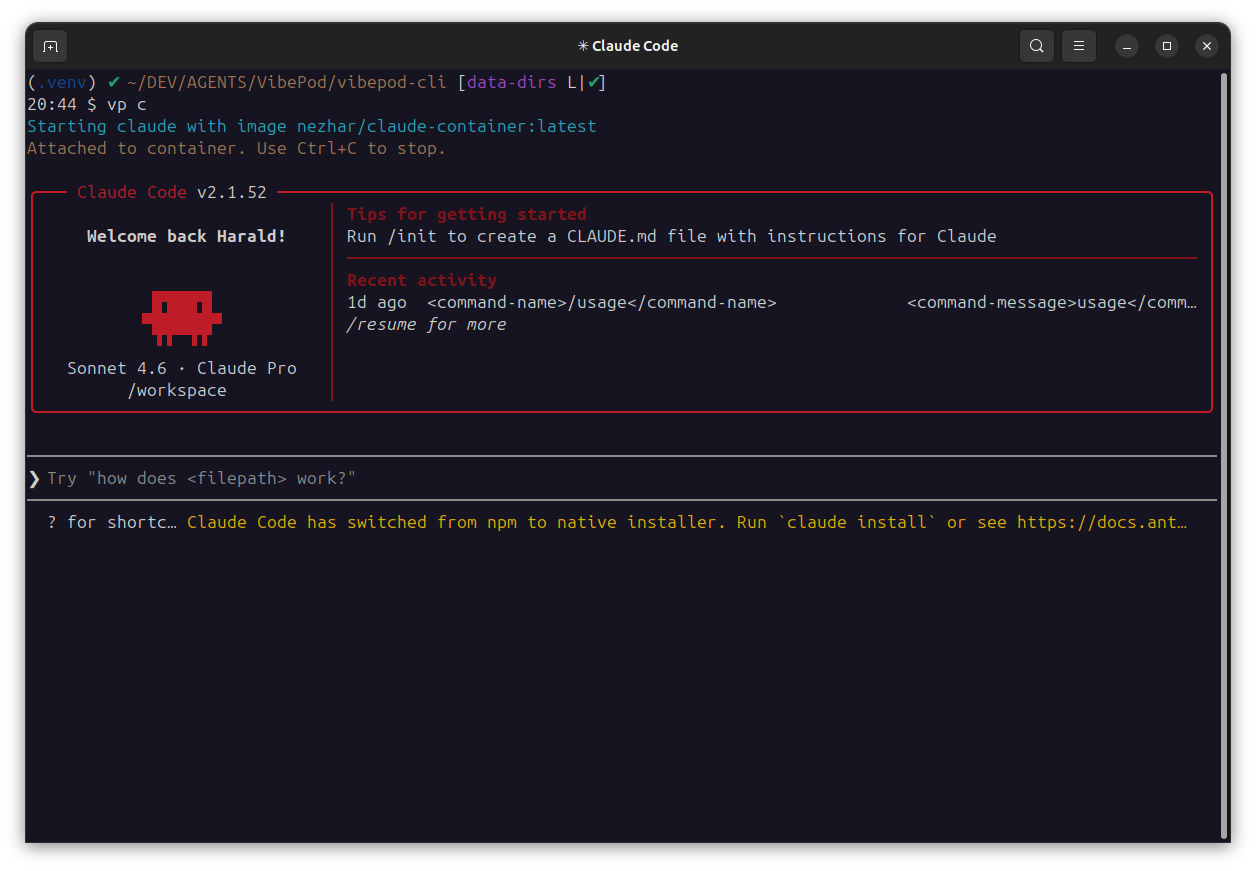
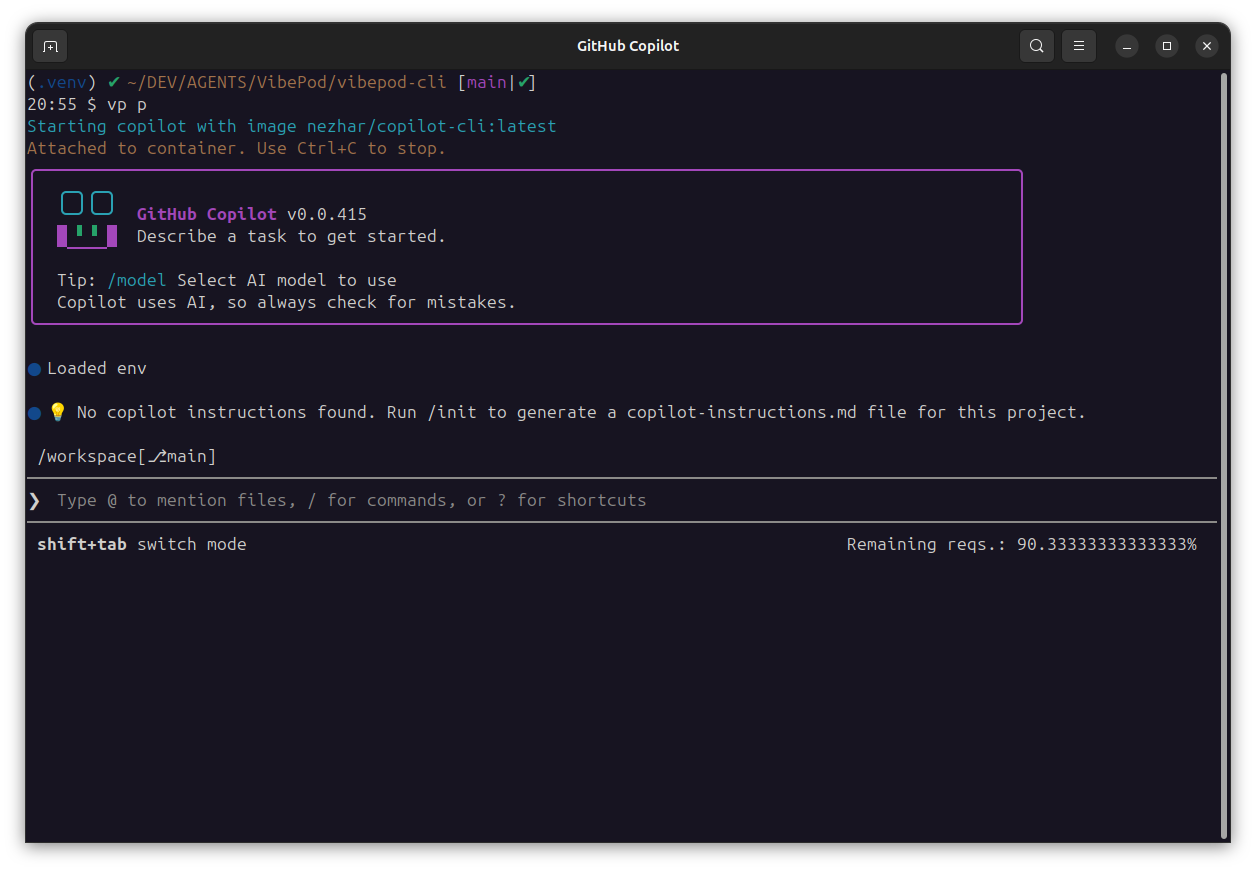
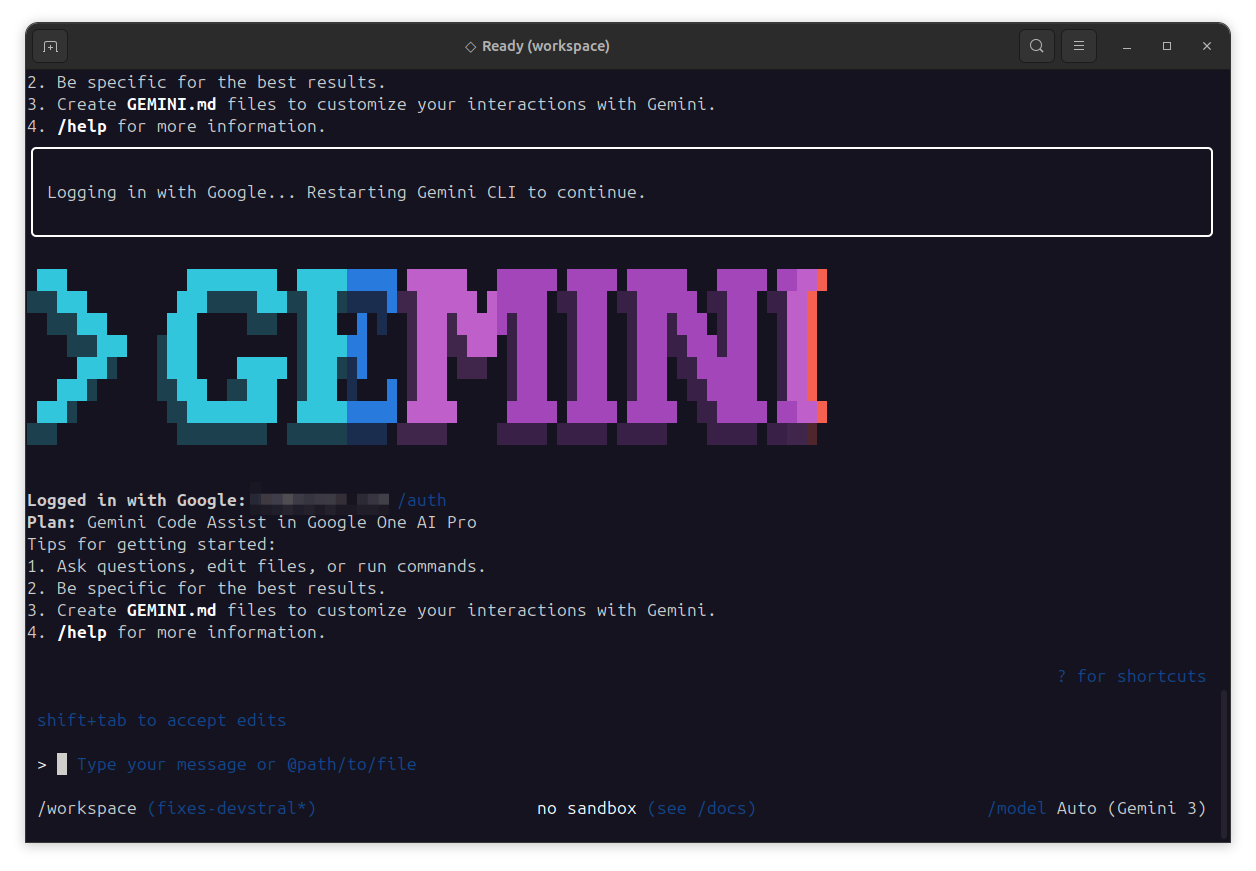
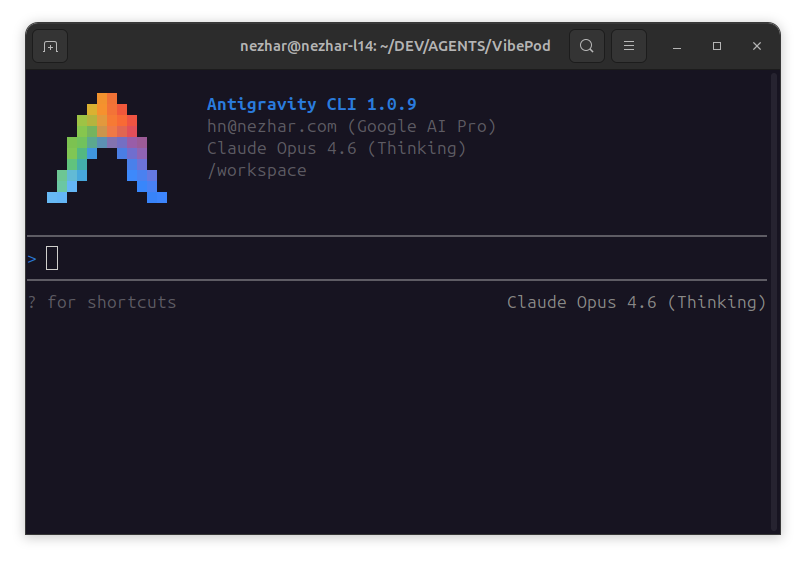
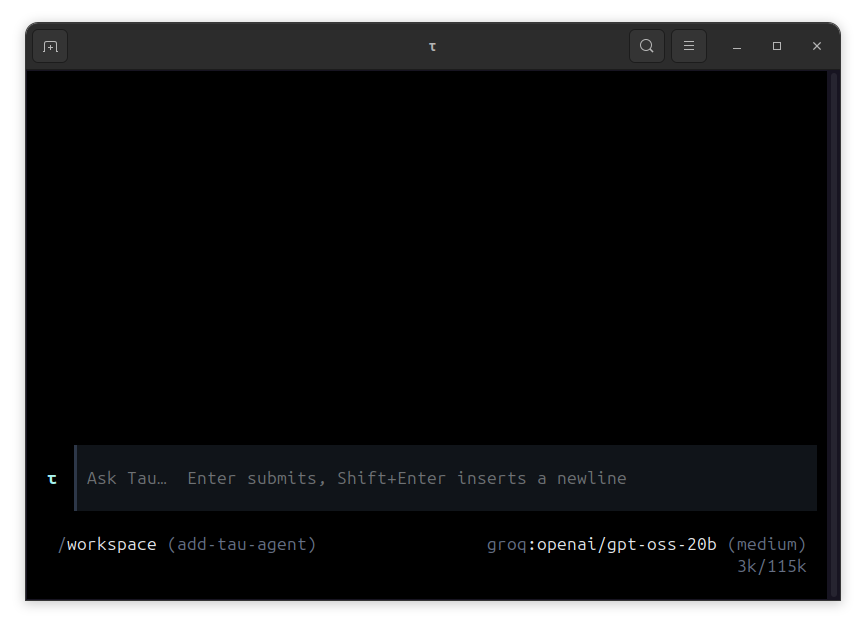
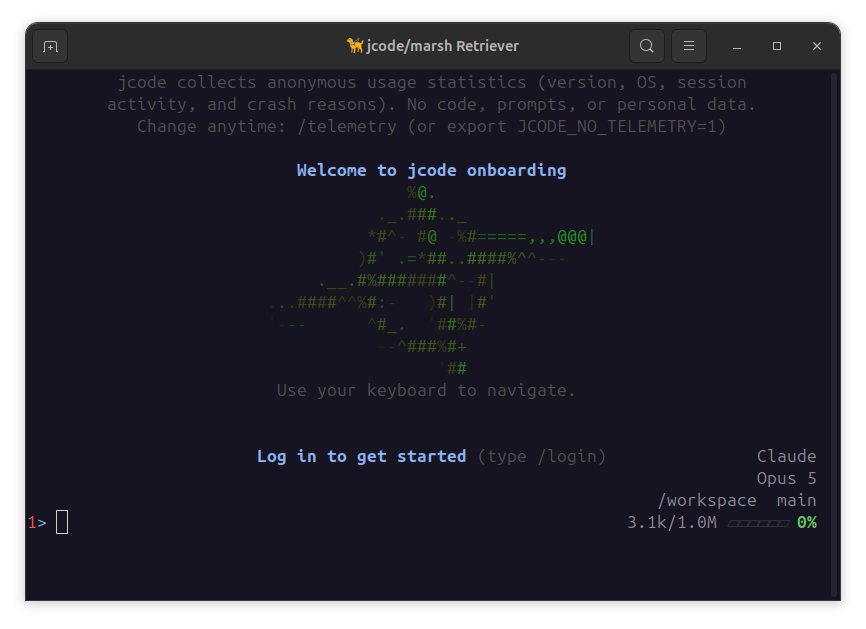
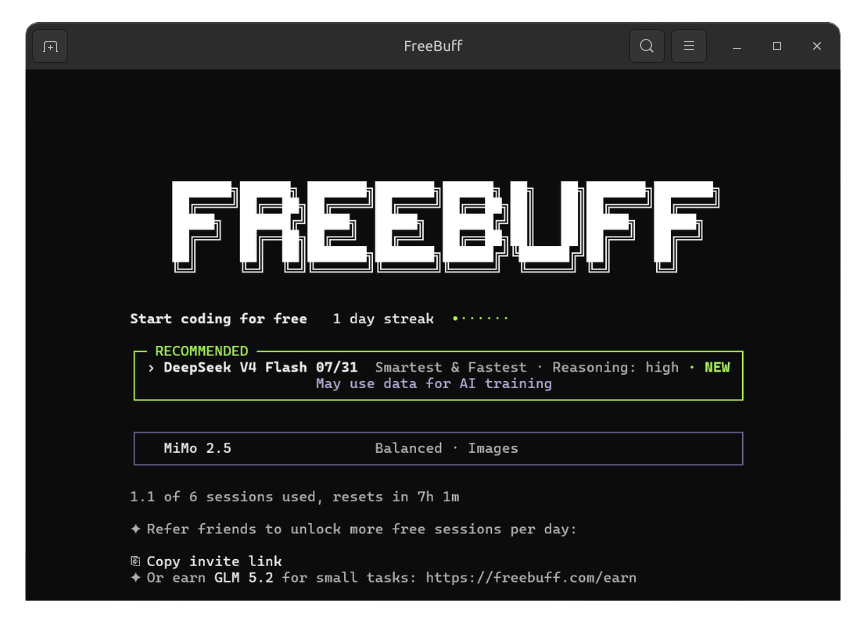
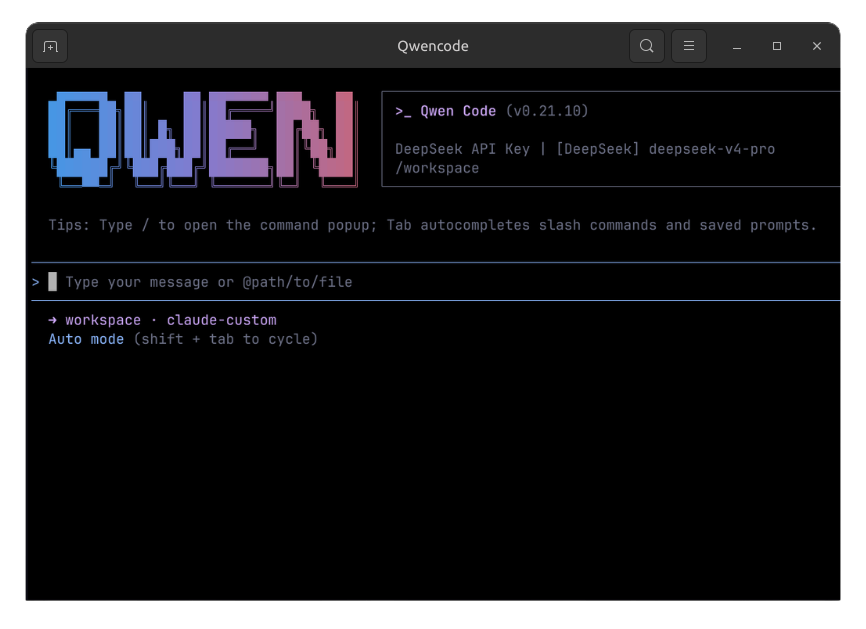
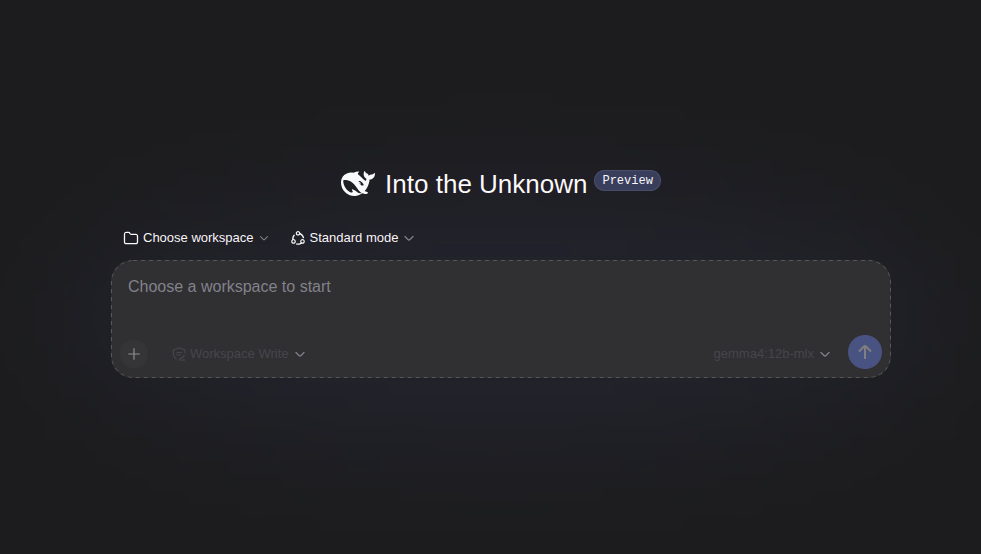
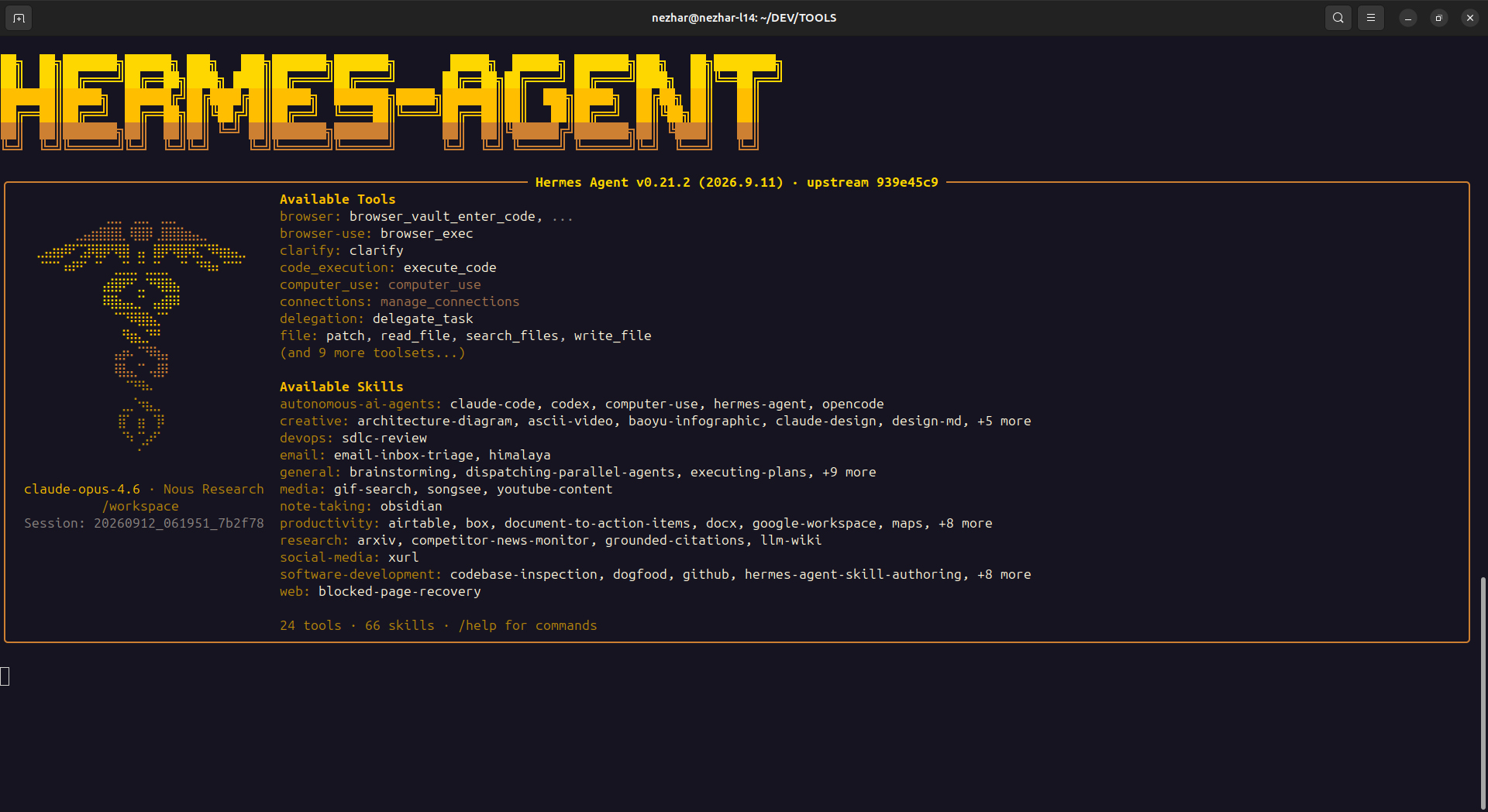
Included screenshots cover the analytics dashboard plus Auggie, Claude Code, GitHub Copilot, Gemini, Mistral, OpenAI Codex, OpenCode, and Pi.

Screenshot of the VibePod analytics dashboard with token usage charts.
VibePod analytics dashboard - compare agents by usage, HTTP traffic, and activity over time.
Screenshot of VibePod workflow with Augment Auggie.
Augment Auggie
Screenshot of VibePod workflow with Claude Code.
Claude Code
Screenshot of VibePod workflow with GitHub Copilot.
GitHub Copilot
Screenshot of VibePod workflow with Google Gemini.
Google Gemini
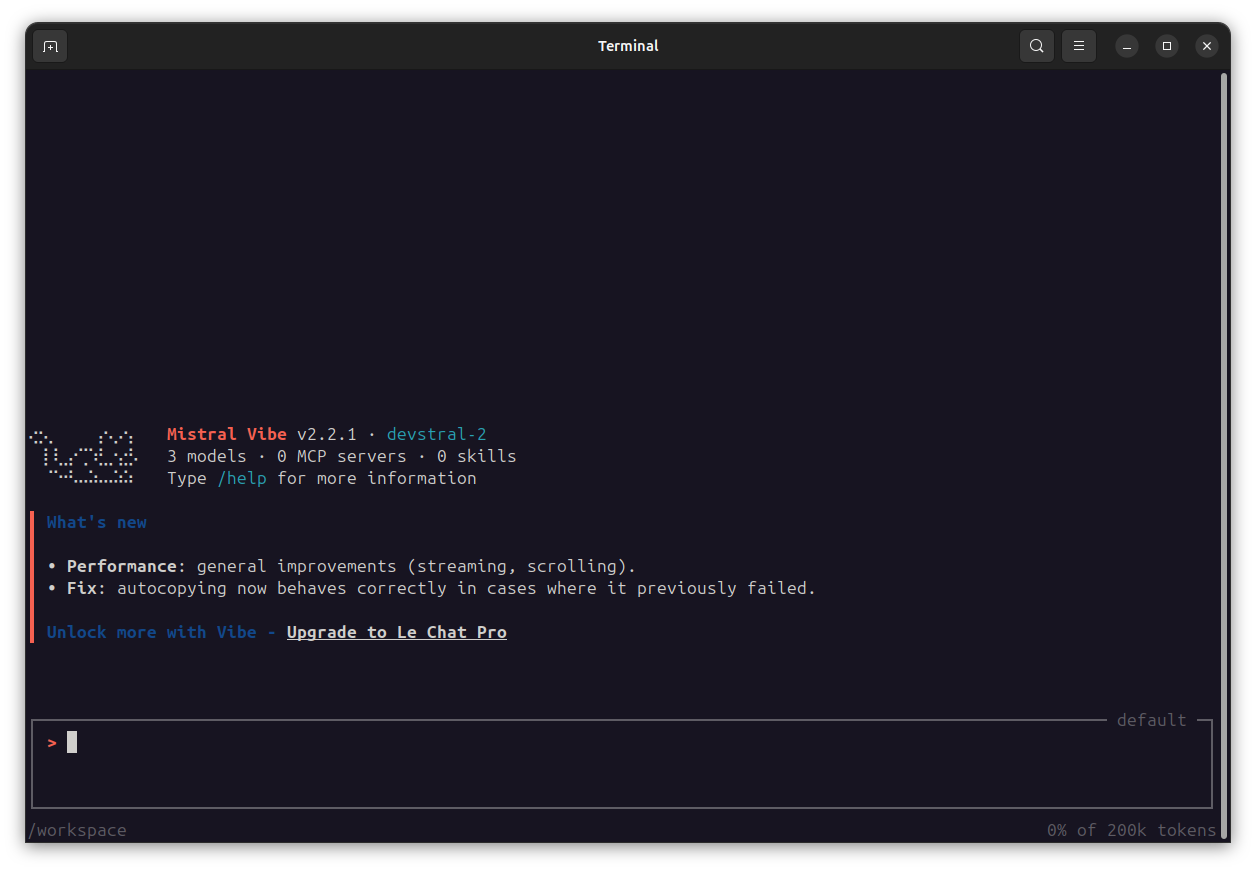
Screenshot of VibePod workflow with Mistral Vibe.
Mistral Vibe
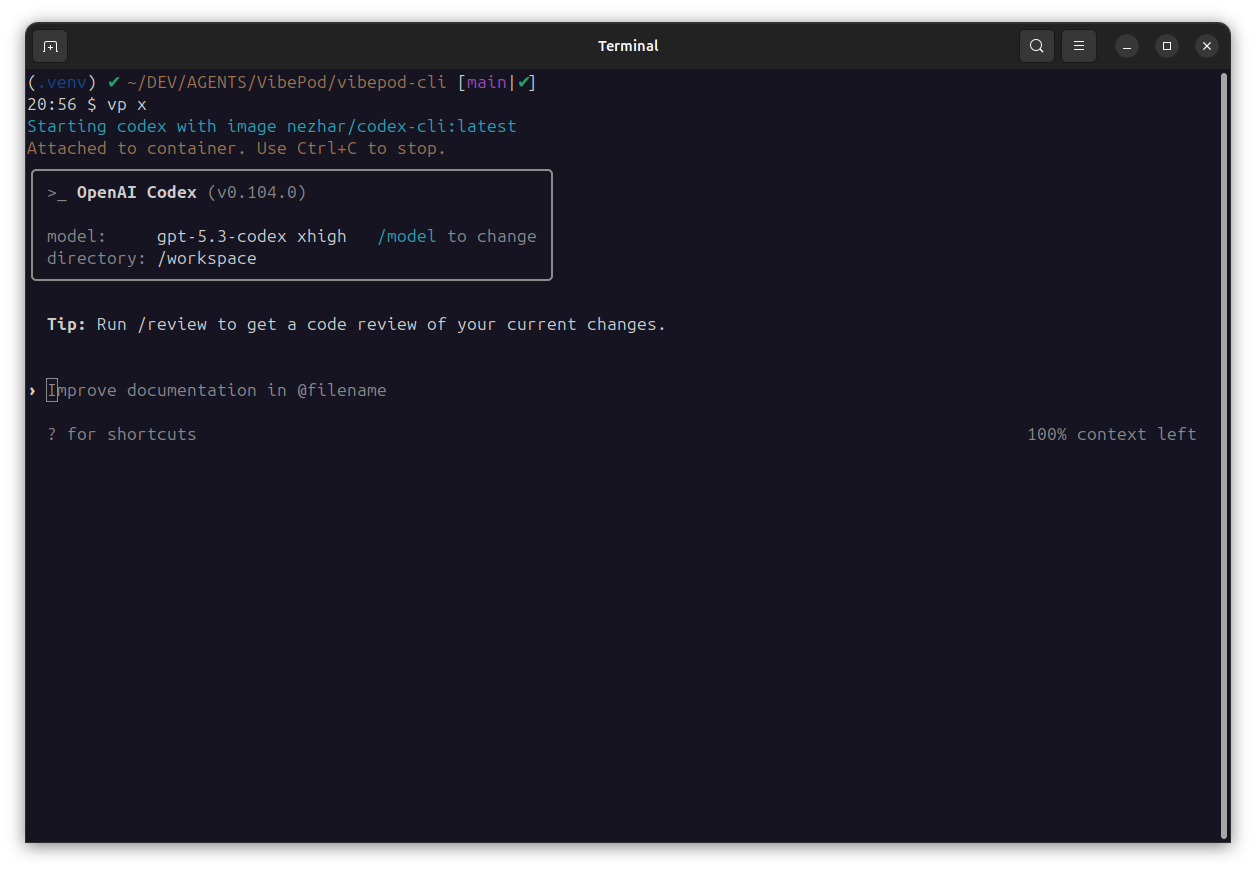
Screenshot of VibePod workflow with OpenAI Codex.
OpenAI Codex
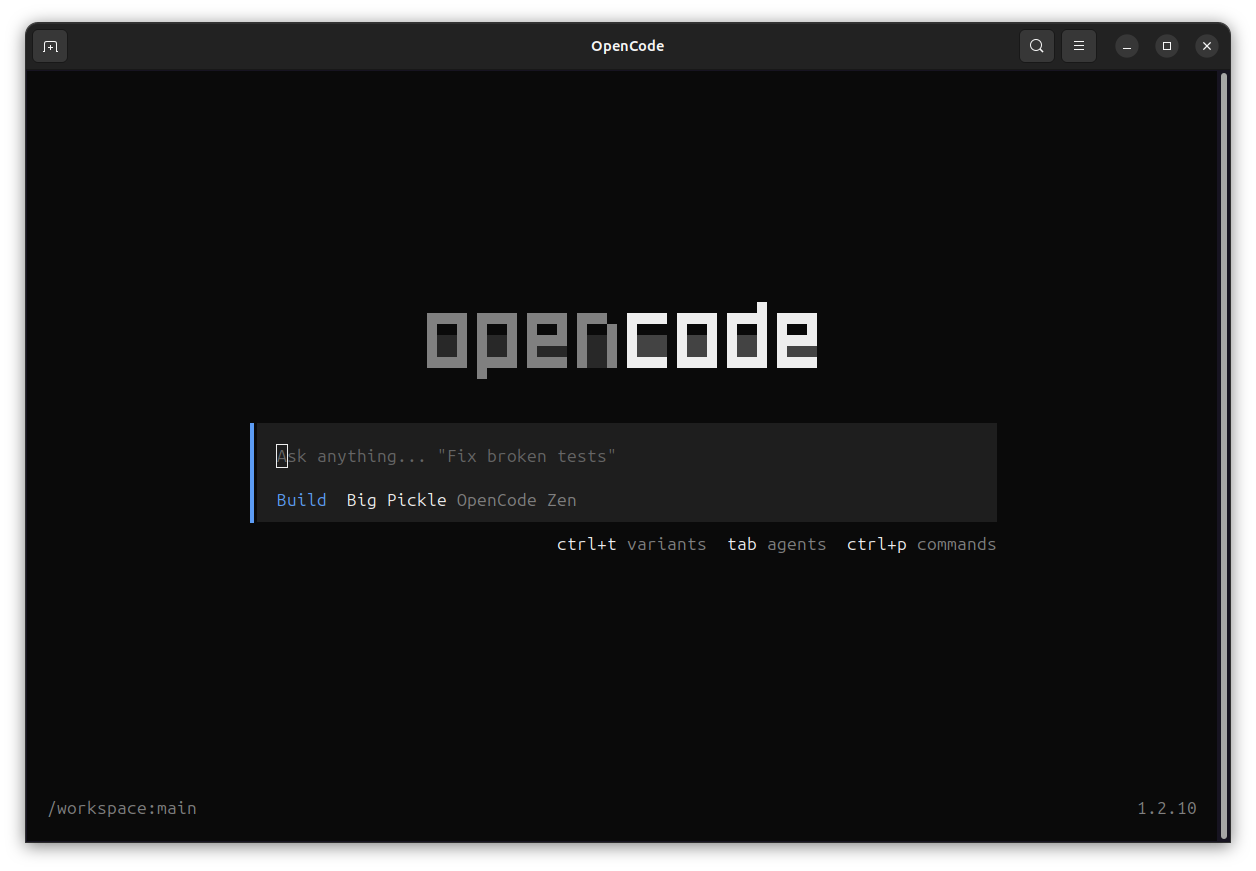
Screenshot of VibePod workflow with OpenCode.
OpenCode
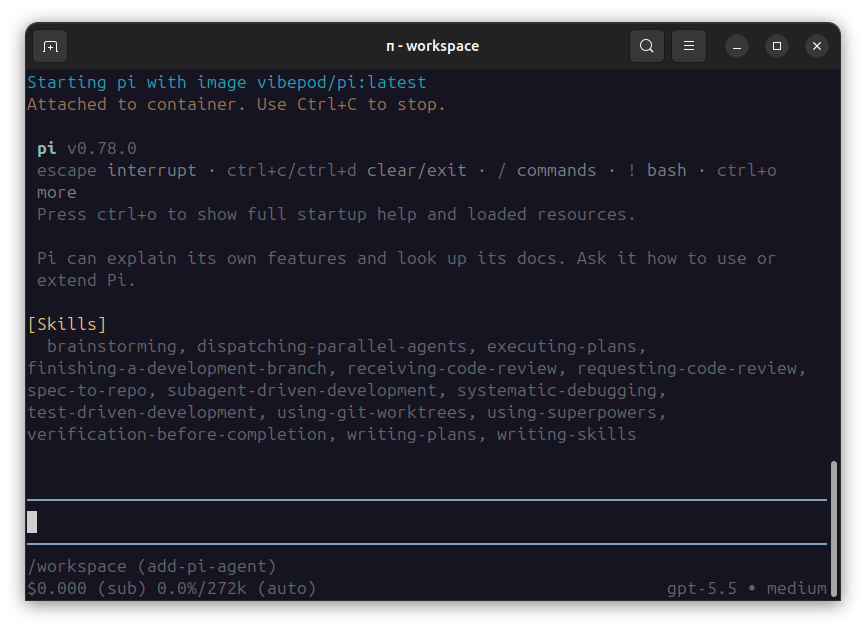
Screenshot of VibePod workflow with Pi Agent.
Pi Agent

FAQ

Top questions

What is the best way to install VibePod CLI?

Install from PyPI using python -m pip install vibepod, then use the README for command examples.

Do I need to configure anything before running an agent?

No. VibePod comes pre-configured for Claude, Gemini, Codex, Devstral, Copilot, Auggie, OpenCode, and Pi. Run vp run <agent> and it starts from the default image.

Can I use YAML config files?

Yes. YAML is optional. Use global config at ~/.config/vibepod/config.yaml or project config at .vibepod/config.yaml to override defaults, share team settings, set custom images, inject env vars, run init scripts, or configure LLM routing.

What does the analytics dashboard show?

The dashboard tracks HTTP traffic, usage over time, and activity per agent. Start it with vp logs start; it opens in your browser and stores data locally.

Can I use it for local workflows?

Yes. The core workflow is local CLI usage so you can run and switch coding agents from your machine in isolated Docker containers.

Does VibePod CLI support auto-complete?

Yes. Run vp --install-completion to enable auto-complete and speed up command entry and agent selection.

Which folder is used as the agent workspace?

The current working directory where commands are run is used as the active agent workspace.

Can this run in CI or automation pipelines?

Yes. The same CLI flow used locally can be scripted for CI/CD jobs.

Which coding agents can I switch between?

VibePod currently supports Claude, Gemini, OpenCode, Devstral, Auggie, GitHub Copilot, OpenAI Codex, and Pi.

Where can I track roadmap and issues?

Use the GitHub issues page to follow changes and request features.

Run AI coding agents locally with zero required setup.

Install from PyPI, start a preconfigured agent, and add YAML only when your team needs shared defaults or deeper customization.